Showing posts with label fall. Show all posts

Monday, October 30

Guilty.


Yes, I've been known to sneak all the cherries out of the fruit bowl, and I've been caught more than once stealing extra frosting off the cake to put on my slice. I've even developed a reputation with my mother-in-law as that elicits warnings whenever one of her poundcakes and yours truly find themselves in the same room together... I will shamelessly cut just the crust off the poundcake, and leave that naked wobbly slice there in cold to fend for itself. I am guilty as charged of non-egalitarian eating. Forget the notion of building up to the climax, or saving the best for last, or even the idea that you don't deserve the frosting unless you eat the cake with it.

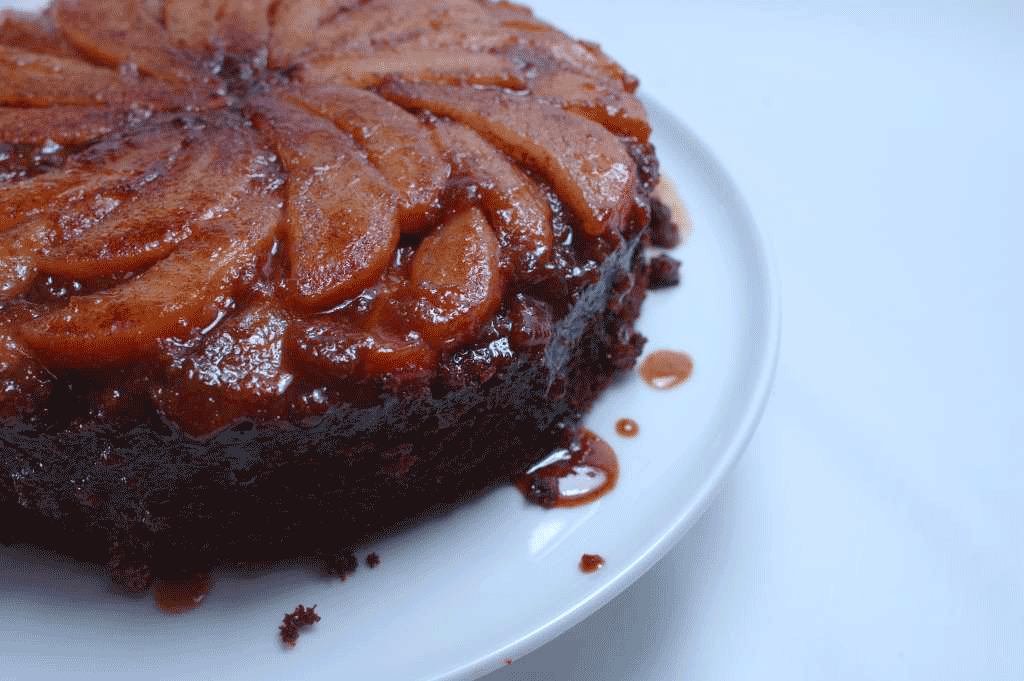
I'm not totally without dignity though. Ideally, a dessert or anything else for that matter, should be so good through and through that you don't want to give up a single crumb. It's a fine eating experience that finds you meticulously planning each bite so that you end with the ideal ratio of crust to the soft center, cake to frosting, or in this case, warm, gooey pears, and oh-so-tender gingerbread.

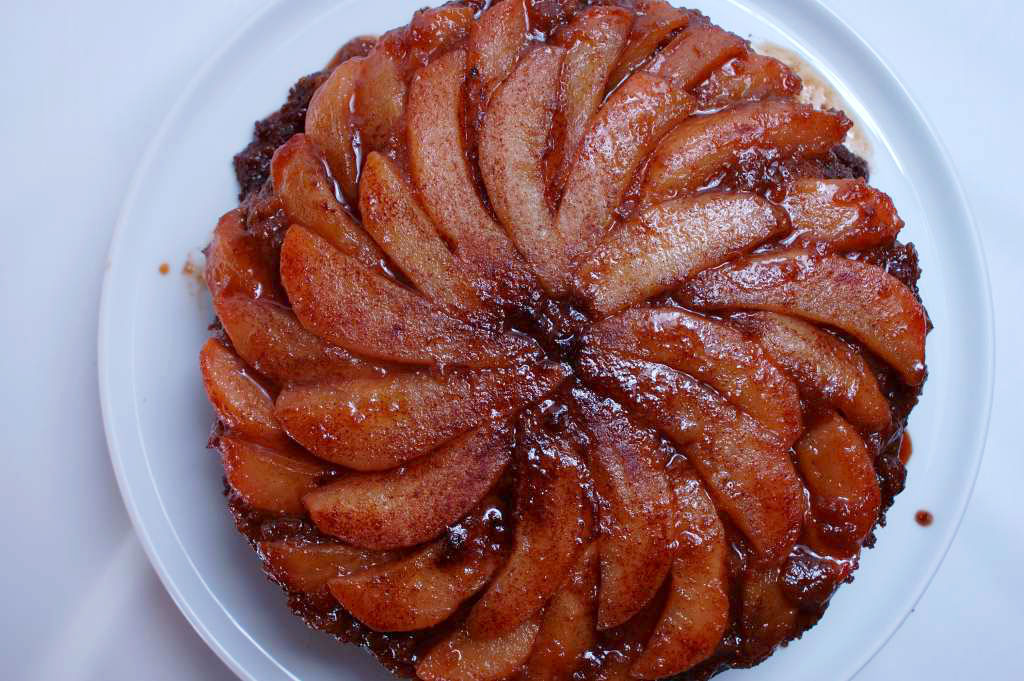
I have to admit there was nothing wrong with this cake, but last night, around 10:00 pm, eastern standard, you could find me hovering over the cake plate, slicing off the top half of a second piece of cake, just so I could eat the goopy pear topping, which had somehow transformed itself in the oven to a almost pudding-like texture. I threw the rest of the piece of the cake away, and never looked back.

I had read a few rave reviews of this cake in various places online, and when I recently bought Leslie Mackie's Macrina Bakery and Cafe Cookbook, it was one of the first recipes I tagged to try (after the Cracked Wheat Walnut Cider Loaf). I was torn between trying this recipe and a very similar recipe out of one of my favorite cookbooks, but ended up deciding on Leslie's recipe because of the copious amount of buttermilk called for - surely a sign of a tender and deliciously moist cake.

This cake was good, but admittedly, I don't think I'd make it again. Not to say that you might not love it, but although I loved how tender and moist the cake turned out, I expect something different from my gingerbread. I want it to be sticky, dark, and dense. I should also admit that skipping the fresh ginger might have made the cake less spectacular, so if you want to try this cake, definitely go for the bite of fresh ginger (mine was moldy, so I passed). I think a scoop of vanilla ice cream, or whipped cream would have been a wonderful accompaniment.

Ginger Pear Upside-Down Cake
Adapted Slightly from Leslie Mackie’s Macrina Bakery & CafĂ© Cookbook

The Pear Topping:
3 Tbs unsalted butter
½ cup light brown sugar
1 ½ tsp ground cinnamon
4-5 medium to large ripe (but not soft) pears, peeled, cored, and quartered lengthwise (I had to cut mine into eigths to make it work out)

The Gingerbread:
8 ounces (2 sticks) unsalted butter, at room temperature
¾ cup light brown sugar
2 Tbs peeled, grated ginger (I substituted 2 teaspoons ground ginger)
3 large eggs
2/3 cup molasses
3 cups unbleached all-purpose flour (I substituted a combination of spelt and whole wheat pastry flour)
1 ½ tsp baking powder
1 ½ tsp baking soda
½ tsp salt
1 ½ cups buttermilk, room temperature


Preheat the oven to 325 degrees Fahrenheit. Butter a 9-inch springform pan, and line the bottom with a 10-inch circle of parchment paper.

For the pear topping, combine 3 Tbs butter, ½ cup brown sugar, and cinnamon in a medium saucepan. Melt the butter over medium low heat until melted; then pour the mixture into the prepared springform pan, completely coating the parchment paper. Place the quartered pears on top of the butter-sugar mixture, lining the pieces up in a circle so that the entire bottom of the pan is covered.

For the gingerbread, cut 2 sticks of butter into 1-inch pieces, and put them in a large mixing bowl. Add ¾ cup brown sugar, and cream the mixture on medium speed for 3-5 minutes, until it is smooth and pale. Add the grated ginger (if using), and beat 1 minute more. Scrape down the sides of the bowl with a rubber spatula. Add the eggs one at a time, beating on low speed and making sure that each egg is fully incorporated before adding another. When all the eggs have been added, slowly pour in the molasses and beat to fully mix. The mixture might look as though it is curdling, but don’t worry—it will come together.

In a separate medium bowl, sift together the flour, baking powder, baking soda, (and ground ginger if using) and salt. Whisk to fully combine.

Alternately add small amounts of flour and buttermilk to the batter, stirring and folding with a rubber spatula until the dry ingredients are just absorbed. Do not overmix the batter. Pour and scrape the batter into the pear-lined pan, smoothing the top with a rubber surface. The pan will be nearly full.

Carefully transfer the pan to the center rack of the oven, and bake for about 1 hour and 45 minutes, until a skewer inserted in the cake’s center comes out clean. Let the cake cool in the pan for 10 minutes on a wire rack. Cover the pan with an upside-down serving plate; then carefully invert them together. Release the sides of the pan, and lift it away. Gently lift the pan’s base off the cake, and peel away the parchment paper. Allow the cake to cool for a half hour or so, and serve warm, with whipped cream.


Note from the Baker :

I had quite a lot of batter leftover, so I used some of my silicone canneles molds, and got 8 little mini gingerbreads out of it; not sure where all the extra batter came from, but the little cakes sure turned out cute!

Sunday, October 1

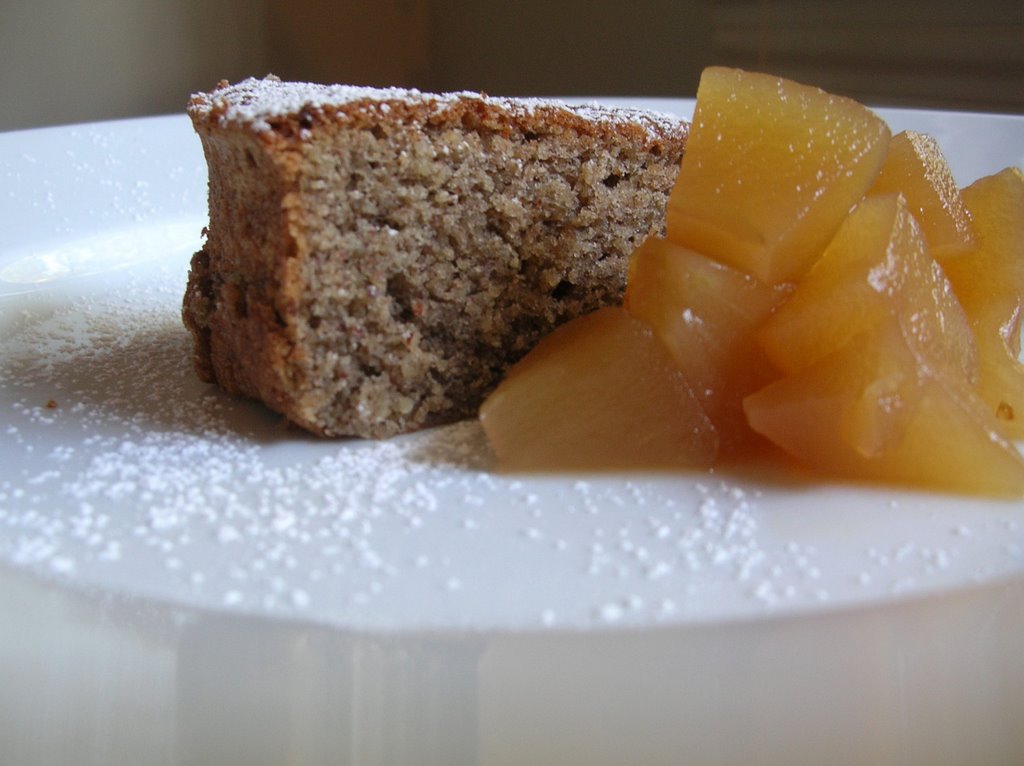
Buckwheat Cake with Cider Poached Apples


This is the perfect fall cake. The color of the buckwheat-flecked cake, and the shiny and jewel-like apples are both beautiful and delicious. The cake is moist and rich, with butter, almonds, and egg yolks, and just a touch of buckwheat flour to hold it together, then lightened up with the addition of egg whites, beaten with sugar until they look like fluffy meringue.

The apples are poached in a mixture of cider and a few simple spices, which smell heavenly while they are soaking up the juice that will turn them almost transparent, and flavor them with subtle notes of clove and cinnamon. I love desserts which provide texture or contrast, and this one does just that. I couldn't decide which I liked better; taking a bite of cake, followed by a bit of apple, or if I preferred to combine the two in one bite. You'll have to make that choice yourself.

The cake would also be incredible with any number of other fruits or fruit syrups. Blood oranges, plums, and apricots come to mind. And this recipe once again comes from the incredible David Lebovitz, whose desserts are perfection in my book.

Buckwheat Cake with Cider Poached Apples
From Ripe for Dessert, by David Lebovitz

For the Buckwheat Cake:
1 ½ cups sliced almonds
½ cup buckwheat flour
1 tsp baking powder
12 Tbsps unsalted butter, at room temperature
½ cup sugar
6 Tbsp sugar
1 tsp vanilla
4 large eggs, room temperature, separated
¼ tsp salt
¼ tsp cream of tarter, (optional)

For the Apples:
3 cups apple cider or unsweetened apple juice
½ cup sugar
1 stick cinnamon
5 whole cloves
2 - 3 firm apples (Granny Smith or Golden Delicious)
powdered sugar, for dusting

Position a rack in the center of the oven and preheat the oven to 350 degrees. Butter a 9 by 2-inch round cake pan and line the bottom with parchment paper.

To make the buckwheat cake: In a food processor, pulse the almonds with the buckwheat flour and baking powder until the almonds are finely ground.

In the bowl of an electric mixer, or by hand, beat together the butter and 1/2 cup sugar until very light and fluffy, 3-5 minutes if using a mixer. Beat in the vanilla and the egg yolks one at a time, scraping the sides of the bowl as necessary.

In a separate glass or metal bowl, whip the egg whites until they become frothy. Add the salt and the cream of tartar, if using, and continue to whip until the whites begin to hold their shape. Gradually whip in the 6 tablespoons of sugar and keep whipping until the whites form soft, shiny peaks.

Blend the almond and buckwheat mixture into the creamed butter and egg yolk mixture with a rubber spatula. Stir about a third of the beaten egg whites into the batter. It will be thick, but this will lighten it up. Then carefully fold in the remaining egg whites until just incorporated. Don't overfold!

Transfer the batter to the prepared cake pan, smooth the top and bake for 45 minutes, until a toothpick inserted in the middle comes out clean. Cool on a wire rack.

To poach the apples: Warm the cider, sugar and spices in a medium saucepan. Peel the apples with a vegetable peeler and use a 1/2 inch melon baller to make the apple balls.

Drop the apple balls into the cider mixture and simmer gently for 10 minutes, or until tender.

Notes:
The apples definitely take longer than 10 minutes - I probably cooked mine for 40 and then reduced the liquid even further. I didn't have a melon baller, so I just made large chunks.

Tuesday, September 19

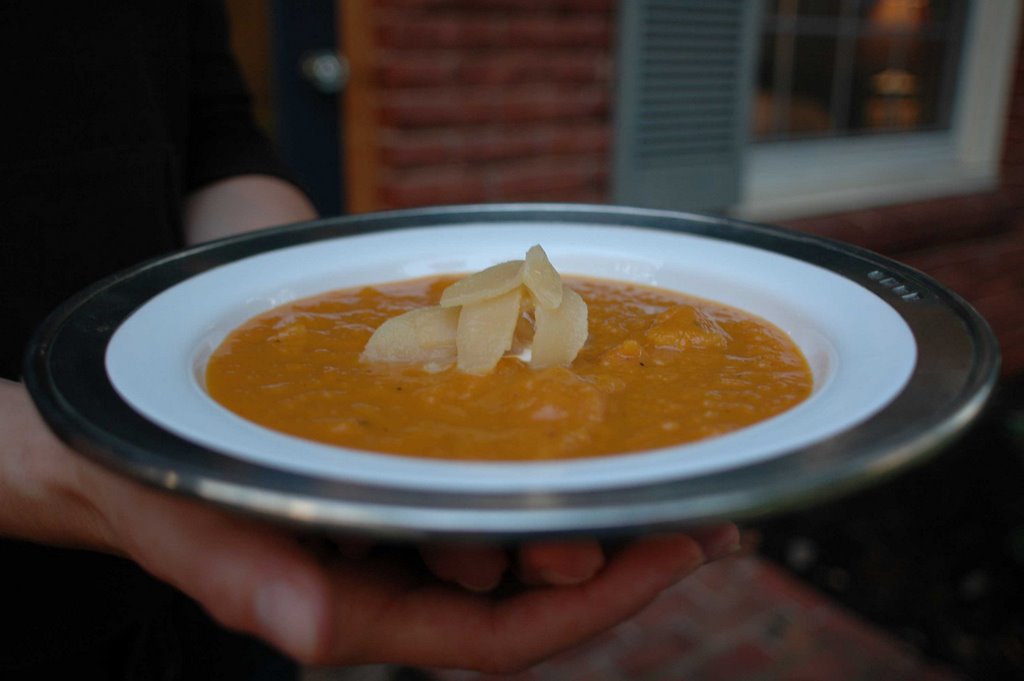
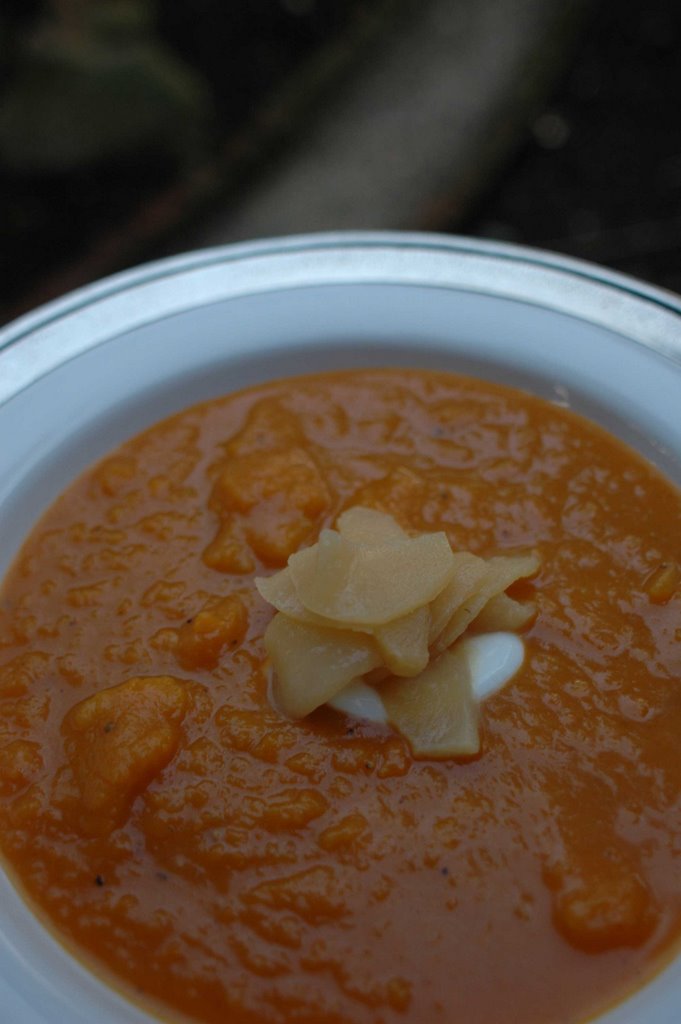
Butternut Squash Soup with Apple Confit


Does that sound delicious, or what? This soup was so easy, and the apple confit pushed it from ho hum, to "oh yum". Okay, that was cheesy, but this soup was great, it was ridiculously simple, and there's very little else to say about it. Make it. You will be so happy you did!

Butternut Squash Soup with Apple Confit
From "Fields of Greens" by Annie Somerville

3 cups Light vegetable or chicken stock
1 Tbsp olive oil
1 Medium Yellow onion, thinly sliced (about 2 cups)
3 Tbsp Calvados (if you don't have Calvados, you could substitute white wine, but the flavor is wonderful, and you'll find a million other uses for it!)
4 lbs Butternut squash, peeled, seeded and cut into large cubes (about 6 cups)
1 Tbsp unsalted butter
2 McIntosh apples or other flavorful, not too tart apples, peeled, cored, and sliced (about 2 1/2 cups)
½ cup Apple Juice
½ cup Creme Fraiche, (I used Greek yogurt)

Heat the olive oil in a soup pot and add the onion, season with salt and pepper, and saute over medium heat until slightly caramelized, about 15 minutes, adding a little stock and scraping with a wooden spoon if they start to stick to the pan. Add 2 Tbsp of the Calvados, and cook for 1-2 minutes, until the pan is almost dry.

Add the squash cubes and about a teaspoon of salt to the onions. Add just enough stock to barely cover the squash (about 2 cups); the squash quickly breaks down and releases its own liquid as it cooks. Cover the pot and cook over medium heat for 20-30 minutes, until the squash is very soft.

Puree the soup in a blender or with a handheld immersion blender, and thin it with stock to reach the desired consistency. Return the soup to the stove and cook over low heat for 30 minutes to further develop the flavors.

While the soup is cooking, make the apple confit. Melt the butter in a medium-size saute pan and add the apples; saute over medium-high heat, stirring to coat them with the butter. When they're heated through, add the remaining Tbsp of Calvados and cook until the pan is almost dry. Add the apple juice, cover the pan, and cook over medium heat for 15-20 minutes, until soft; cook, uncovered, for 8-10 minutes to reduce the liquid. Mash the apples, making sure the confit retains some texture.

Stir half the confit into the soup, saving the rest to stir into each serving. Season the soup with salt and pepper to taste. Add a spoonful of apple confit and a swirl of creme fraiche to each serving.


Notes:
To make a wonderful meal, serve this soup with crusty sourdough bread, nutty, well-aged Gruyere cheese, and a salad of biter greens with toasted walnuts and walnut-oil vinaigrette.

Vermont Farm Table